

“Madam, we can’t help you. You are not on our list,” a nurse at Kontagora Central Primary Healthcare Centre (PHC) told Maimuna Aliyu at 12 weeks, ending the hope of a pregnant woman seeking her first prenatal checkup.
The “list” refers to the enrolled beneficiaries under the Basic Health Care Provision Fund (BHCPF), which ties subsidized healthcare to a holder’s National Identity Number (NIN) and to data held by the National Health Insurance Authority (NHIA). But over 100 million citizens lack it. Nigeria’s maternal mortality ratio is extremely high at about 1,047 per 100,000 live births from preventable pregnancy-related causes. To date, free healthcare access in rural areas remains accessible only to the ‘visible’ few.
Nigeria’s NIN system is a foundational component of the country’s digital public infrastructure (DPI) agenda, designed to streamline services through centralized identification. However, it rests on the assumption of universal digital access in a country where 54% of the population lacks internet connectivity and 40% live without reliable electricity.
This leads to the unintended consequences of digital healthcare reforms in Niger State, which violate a core DPI principle of inclusion: no one should be worse off because of digitization.

Photo Credit: Anibe Idajili
Urban Efficiency vs. Rural Neglect
Niger State, Nigeria’s largest by landmass, spans 76,363 square kilometers, much of which is rural and difficult to access. Its rural communities are defined by rugged terrain, fragile infrastructure, and logistical challenges due to their long travel distance. Yet, the National Identity Management Commission (NIMC), tasked with issuing NINs, has concentrated registration centres in mostly urban and semi-urban locations.
Data from NIMC’s June 2025 report highlights a disparity in NIN enrollment between Niger and other States. For instance, with a population of 6 million, Niger State registered only 1,169,857 women for NIN, about 15.6% of its female populace, compared to Osun State’s 2.4 million (32%) despite a similar population. This 18% gap indicates a systemic challenge rooted in a structural accessibility problem and not individual unwillingness.
For residents of Kagara Tsahuwa in Kontagora Local Government Area (LGA), the nearest NIN enrollment centre is a two-hour drive away, a costly journey for low-income families. This mirrors findings from the World Bank’s 2022 rural mobility study, which revealed that people in rural areas in developing countries like Nigeria frequently forgo essential services, including primary healthcare, due to travel costs. Without a NIN, access to the Basic Health Care Provision Fund (BHCPF) remains out of reach, worsening healthcare inequity.

Photo Credit: Anibe Idajili
Socio-Cultural and Religious Dimensions of Exclusion
In many rural communities in Niger State, patriarchal traditions dominate decision-making, and women often require male guardianship or spousal permission to leave the house for official errands. For married women, especially in conservative communities, mobility is restricted by cultural expectations of domestic responsibility and seclusion. Traveling long distances alone to urban centres for NIN registration may be viewed as socially inappropriate.
Moreover, early marriage remains prevalent in Niger State. Last year, 100 orphan girls in the State were married off in a mass wedding ceremony sponsored by the Speaker of the Niger State Assembly, Abdulmalik Sarkin-Daji. In Nigeria, 30.3 % of girls are married before their 18th birthday, and 12.3 % are married before the age of 15. Many of these young brides are excluded from formal identification systems, as they may never have attended school or possessed official documents. Without birth certificates or parental support, their path to NIN registration is blocked, locking them out of maternal health services when they need them most.
These cultural and religious undercurrents not only delay access; they entrench systemic exclusion, turning digital inclusion into an unattainable ideal for millions of women.
The Cost of Exclusion
At the Tudun Wada MCH-PHC in Kontagora, a designated BHCPF focal facility, a nurse is forced to turn away pregnant women, feverish children, the elderly, and hypertension patients because they lack NINs. A policy meant to digitise healthcare access now excludes the most vulnerable.
“I can’t help you until you get a NIN,” she says, a phrase she has mastered due to helplessness, not spite.
In Rigolo community, Magama LGA, Mallam Shehu, a 65-year-old farmer, has battled hypertension for over three years. His wife, Hauwa, once attempted to organize the family to go to the nearest NIN enrollment centres in Nasko town or neigbouring Kebbi State, but the ₦20,000 round-trip cost proved impossible for the subsistence farmers.
“The government says healthcare is free,” he mutters, “but even free things have a price.”
Children bear the heaviest burden. In Jakiri village, Rafi LGA, Community Health Workers (CHWs) report that parents avoid clinics entirely, fearing rejection. Many mothers admit delaying or skipping antenatal care due to NIN barriers, an outcome directly contradicting public health goals.

Photo Credit: Anibe Idajili
Caught in the Crossfire
Frontline health workers are trapped between the NIN-BHCPF mandate and human need.
“The cost of healthcare for those outside the system is high. But our hands are tied. The NIN requirement for the BHCPF does not allow exemptions,” says Jubril Isah, Nurse-in-charge at Kudu PHC.
At the community level, Ward Development Committees (WDCs) struggle to mediate between residents and bureaucracy.
“Many mothers, especially those predominantly farmers and traders, are often too busy or just negligent in getting their NINs. They often prioritise their farms and businesses,” says Mohammed A. Aliyu, Chairman of the Mokwa Central WDC.
This framing, however, overlooks the structural reality where time poverty, distance, cost, insecurity, and digital exclusion shape these choices.
Aisha Ahmed, the Program Officer of the State BHCPF, maintains that, “Officers in charge (OICs) of PHCs know who to call when patients need to be enrolled. They have their contacts, so I do not know why this is an issue.”
This assumption ignores the reality that many rural OICs themselves, low-paid and under-resourced, lack the tools or permissions to support the enrollment of patients.
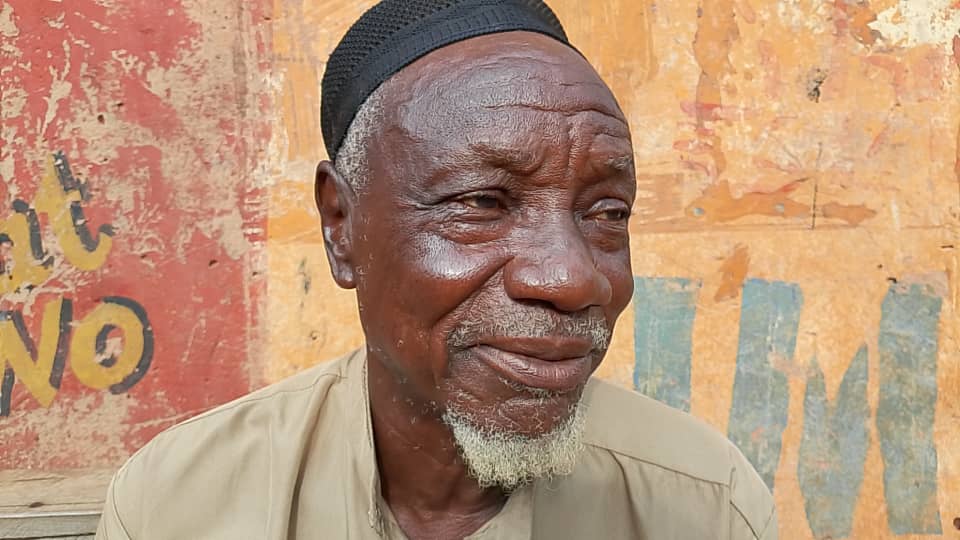
Photo Credit: Anibe Idajili
Policy in Name Only?
The BHCPF allocates 1% of Nigeria’s Consolidated Revenue Fund to primary healthcare and, in October, disbursed ₦3.2 billion. Yet, rural PHCs struggle to utilise these funds due to low NIN enrollment.
The National Health Insurance Authority (NHIA) defends the mandate in a Memorandum of Understanding (MoU) with the NIMC: “The NIN will link the identity of NHIA members to their patient records, not only for easy identification but also to streamline access to care.”
While technically sound, this approach disregards context. In the northern Nigeria region, where 65% of the country’s poor population resides, the NIN requirement functions more as a gatekeeper than as an enabler.
An official of the NIMC office in Minna office, speaking anonymously, acknowledges the gap: “We’re working on more mobile registration units and pushing for enrollment in rural areas.” For now, these solutions remain aspirational.
The Structural Crisis of Digital Public Infrastructure
Nigeria’s DPI framework, launching in the first quarter of 2026, aims to integrate identity, payments, and data systems. However, the current NIN architecture illustrates a critical failure to apply DPI’s universal principles: Inclusion by design, not by exception, offline and low-tech compatibility, interoperability across systems and geography, and no denial of essential services due to digital gaps.
Data from the Nigerian Communications Commission (NCC) shows that internet speeds in underserved areas are up to 50% slower. In rural Niger State, where the nearest registration centres are often many kilometers away, even the simplest digital tasks like submitting documents online or receiving SMS confirmations become a difficulty.
Security compounds the crisis. In late 2025, terrorism escalated with the abduction of over 300 students. For residents like Shehu, the threat of insecurity adds a layer to the already difficult journey for a NIN. “Even if we had the money, travelling would mean risking our lives,” he explains.
A Call for Inclusive Rural NIN Access
Experts argue that Nigeria’s DPI must adopt a “reverse innovation” approach, where solutions are designed for the underrepresented rather than at them. Shedrack Muazu, a public health advocate, suggests a hybrid model. “We need a digital system for those with access and, in the short term, paper-based NIN applications for those without. They can be validated locally by ward officers.”
In Kpaki/Takuma Ward, Mokwa LGA, Chairman John D. Salau already promotes this approach through BHCPF campaigns that emphasise NIN registration, but resistance persists. His efforts highlight the tension between progress and exclusion.
Can Nigeria redesign its digital identity systems to serve health equity rather than administrative convenience? The answer will determine whether DPI becomes a bridge or a barrier to care.
This report is produced under the DPI Africa Journalism Fellowship Programme of the Media Foundation for West Africa and Co-Develop.